
Minnesota DHS Breach: A Closer Look at What Happened and Why It Matters Nationwide
Data breaches are no longer isolated incidents limited to private corporations or tech companies. Increasingly, public sector organizations—entrusted with some of the most sensitive personal information—are finding themselves at the center of major cybersecurity events. One such incident is the Minnesota Department of Human Services (DHS) data breach, which exposed the personal information of more than 300,000 individuals.
Although the breach occurred in Minnesota, its implications reach far beyond state lines. For residents, policymakers, and organizations in states like North Carolina, this incident serves as a sobering reminder of the risks facing government systems and the importance of strong cybersecurity governance.
This article examines what happened in the Minnesota DHS breach, who was affected, how the breach occurred, and what lessons can be learned to prevent similar incidents in the future.
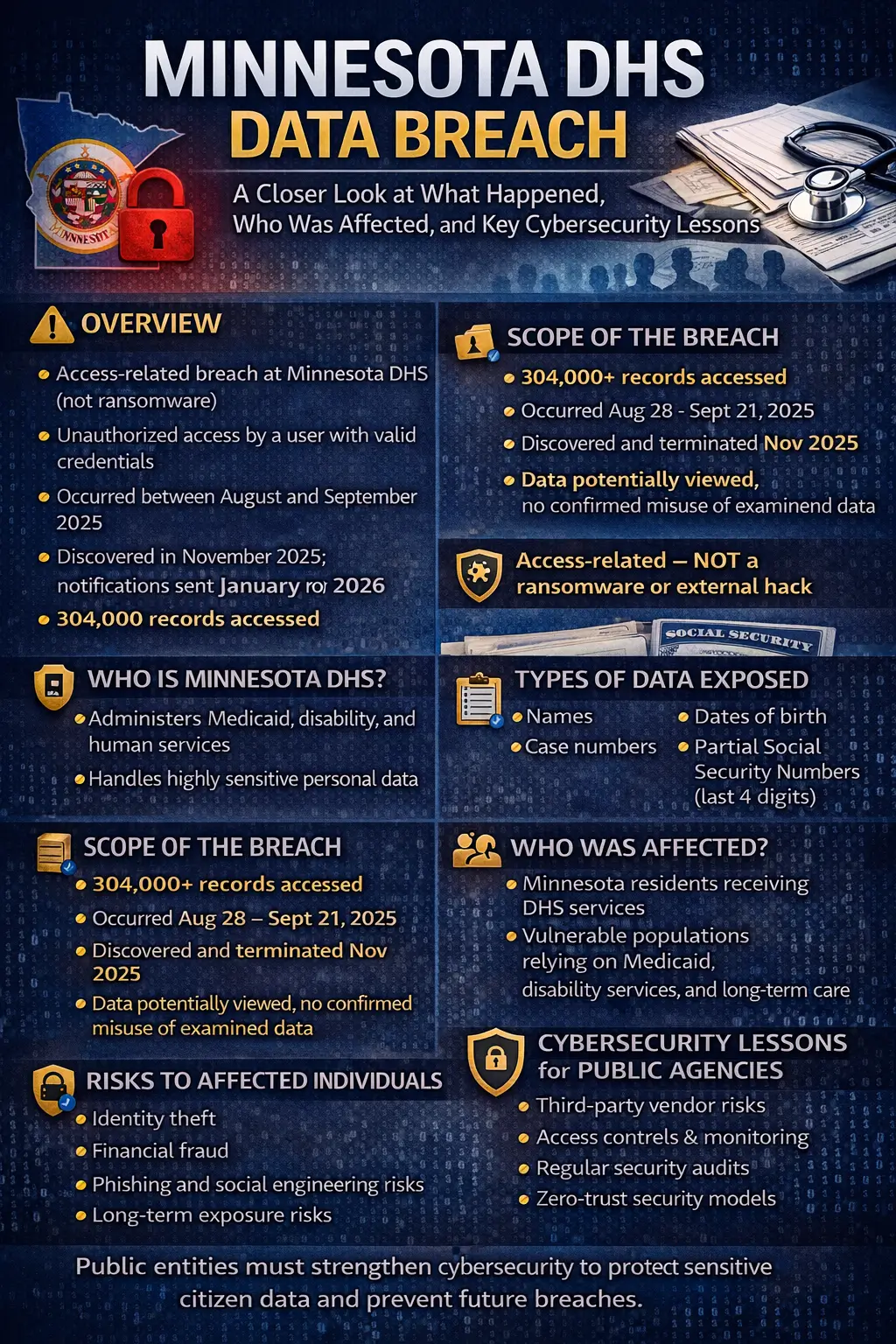
Overview of the Minnesota DHS Data Breach
The Minnesota DHS data breach came to public attention in early 2026, following an internal investigation into unauthorized access within a state-managed system. Officials confirmed that an individual with legitimate system credentials accessed records they were not authorized to view.
The unauthorized access occurred between late August and late September 2025, but the activity was not detected until several weeks later. Once discovered, the issue triggered a broader investigation, eventually leading to notification letters being sent to affected individuals in January 2026.
What makes this breach particularly significant is its scale and sensitivity. More than 300,000 records were exposed, many belonging to individuals who rely on government-provided healthcare and human services. As a public sector incident, it highlights vulnerabilities that can exist even when systems are not targeted by traditional cybercriminal attacks.
Who Is the Minnesota Department of Human Services?
The Minnesota Department of Human Services is a central state agency responsible for administering a wide range of programs that support residents’ health and well-being. These programs include:
- Medicaid and healthcare assistance
- Disability services and long-term care support
- Mental health and substance use services
- Social and human services coordination
To deliver these services effectively, DHS must collect and store highly sensitive personal data, including identifying details, eligibility information, and service-related records. This data is used by counties, tribal governments, and healthcare providers across the state.
Because of this role, DHS systems contain information that—if exposed—can have serious consequences for individuals, particularly those already in vulnerable situations.
How the Breach Happened
Unlike many high-profile breaches that involve malware or ransomware, the Minnesota DHS breach was access-related.
The incident stemmed from unauthorized use of valid credentials, meaning the individual involved was permitted to use the system but exceeded their authorized level of access. The activity was linked to a third-party vendor environment rather than a direct attack on DHS infrastructure.
Importantly, state officials emphasized that:
- The breach was not the result of ransomware
- There is no evidence of external hacking
- The issue involved improper access rather than a technical system failure
This type of breach underscores a critical reality in cybersecurity: internal access misuse can be just as damaging as external attacks.
Systems and Applications Involved
The MnCHOICES System
At the center of the incident was MnCHOICES, a statewide system used to conduct assessments and manage data related to long-term care and human services eligibility.
MnCHOICES stores demographic and service-related information that helps agencies determine what types of support individuals may qualify for. Because it supports multiple organizations and providers, access to the system must be carefully controlled.
Role of Third-Party Vendors
The system is supported by FEI Systems, a third-party technology vendor that provides software and operational support. Government agencies frequently rely on vendors like FEI Systems due to the complexity of managing large-scale public service platforms.
While outsourcing can improve efficiency, it also introduces vendor risk, making oversight, auditing, and access monitoring essential components of cybersecurity strategy.
Scope of the Breach
The scope of the Minnesota DHS breach was extensive:
- More than 300,000 individuals were potentially affected
- Unauthorized access occurred over several weeks
- Investigators could not definitively determine which specific records were viewed for each individual
Although there is currently no evidence that the exposed data was misused, the inability to confirm exactly what was accessed prompted DHS to notify all potentially affected individuals.
Types of Data Exposed
The breach primarily involved personally identifiable information (PII), including:
- Full names
- Dates of birth
- Mailing addresses
- Phone numbers
- Medicaid identification numbers
- Partial Social Security numbers (last four digits)
For a smaller group of individuals, additional information related to healthcare services may also have been accessed.
While full Social Security numbers and financial account details were not reported as exposed, even partial data can increase the risk of identity theft or fraud when combined with other information.
Who Was Affected
The individuals affected by the breach were Minnesota residents receiving DHS services, including those involved in healthcare and long-term care programs.
Many belong to vulnerable populations, such as:
- Elderly individuals
- People with disabilities
- Residents relying on public healthcare or social services
Breaches involving human services data are especially concerning because the affected individuals may face greater challenges in detecting or responding to identity-related fraud.
Discovery and Response Timeline
The breach followed a delayed discovery pattern:
- August–September 2025: Unauthorized access occurred
- November 2025: The activity was detected by the vendor
- Access revoked: The individual’s system access was terminated
- January 2026: Notification letters were sent to affected individuals
Following discovery, DHS initiated a forensic investigation, reviewed access controls, and reported the incident to appropriate oversight authorities.
Official Response from Minnesota DHS
Minnesota DHS publicly acknowledged the breach and communicated directly with impacted individuals. Notification letters explained:
- What happened
- What types of information were involved
- Steps individuals could take to protect themselves
The department also reported the incident to relevant regulatory bodies and emphasized its commitment to improving safeguards and access monitoring moving forward.
Legal and Regulatory Implications
Because the breach involved healthcare-related data, it raised potential concerns under HIPAA and other state and federal privacy laws.
Regulatory agencies may evaluate:
- Whether access controls were adequate
- Whether monitoring systems were sufficient
- Whether notification timelines met legal requirements
Even in cases without proven misuse, compliance reviews can lead to policy changes, penalties, or mandated security improvements.
Class Action Lawsuits and Legal Claims
Following public disclosure, several law firms announced investigations into potential class action lawsuits related to the Minnesota DHS breach.
These claims generally focus on:
- Alleged failure to safeguard sensitive data
- Inadequate monitoring of user access
- Potential long-term risks to affected individuals
As of now, investigations are ongoing, and affected individuals may have the option to participate in legal action depending on how cases develop.
Risks to Affected Individuals
Even without confirmed misuse, exposed data can increase risks such as:
- Identity theft
- Medical or benefits fraud
- Phishing and impersonation attempts
- Long-term misuse of demographic information
Public sector breaches often have delayed consequences, making vigilance especially important.
What Impacted Individuals Should Do
Individuals who received breach notification letters are encouraged to:
- Monitor healthcare and financial statements closely
- Watch for suspicious emails, calls, or messages
- Consider placing fraud alerts or credit freezes
- Regularly review credit reports
While DHS did not offer complimentary credit monitoring, proactive personal monitoring remains a critical protective step.
Cybersecurity Lessons from the Minnesota DHS Breach
Several key lessons emerge from this incident:
- Authorized access must still be monitored
- Third-party vendors require strict oversight
- Least-privilege access policies are essential
- Logging and real-time monitoring can reduce exposure time
Cybersecurity is as much about governance and policy as it is about technology.
Broader Implications for Government and Public Sector IT
The Minnesota DHS breach reflects a broader trend of state government data breaches across the U.S. Aging systems, limited budgets, and complex vendor relationships continue to challenge public sector cybersecurity.
For states like North Carolina, this incident reinforces the importance of investing in modern security frameworks and proactive risk management.
How Similar Breaches Can Be Prevented
To reduce the likelihood of similar incidents, agencies should adopt:
- Zero-trust security models
- Least-privilege access enforcement
- Regular vendor security audits
- Continuous access monitoring and logging
- Well-tested incident response plans
These measures can significantly reduce both the likelihood and impact of unauthorized access incidents.
Final Takeaway
The Minnesota DHS breach is a powerful reminder that data security failures do not always involve dramatic cyberattacks. Sometimes, the greatest risks come from within—through insufficient oversight of authorized access.
For public institutions nationwide, including those serving North Carolina residents, the message is clear: safeguarding sensitive citizen data requires constant vigilance, accountability, and investment in strong cybersecurity governance.
Frequently Asked Questions (FAQs)
What happened in the Minnesota DHS data breach?
An individual with authorized system access improperly accessed records in the MnCHOICES system, exposing personal data of over 300,000 individuals.
How many people were affected by the Minnesota DHS breach?
Approximately 304,000 individuals were potentially impacted.
What data was exposed in the Minnesota DHS breach?
The exposed data included names, dates of birth, contact information, Medicaid IDs, and partial Social Security numbers.
Was the Minnesota DHS breach a ransomware attack?
No. The breach was access-related, not caused by ransomware or external hacking.
Is there a lawsuit related to the Minnesota DHS data breach?
Several law firms are investigating potential class action lawsuits, though cases are still in early stages.
What should I do if I was impacted by the Minnesota DHS breach?
Monitor your accounts, watch for phishing attempts, review credit reports, and consider fraud alerts or credit freezes for added protection.