
Grubhub Confirms a Data Breach: What North Carolina Consumers and Businesses Need to Know
When a company as widely used as Grubhub announces a security incident, the news travels fast—and for good reason. In a recent disclosure that quickly made national data breach news, Grubhub confirms a data breach involving unauthorized access to information tied to third-party platforms.
For residents across North Carolina, where food delivery services have become part of everyday life—from downtown Raleigh offices to university campuses in Chapel Hill and Durham—this announcement raises practical and pressing questions. Was customer data exposed? How did the breach occur? And what does this incident reveal about the broader risks facing cloud-based services?
This article takes a clear, measured look at the Grubhub data breach, explaining what is known so far, how the attack unfolded, and why cybersecurity experts see this incident as part of a growing pattern affecting food delivery platforms and other SaaS-driven businesses.
A Closer Look at the Grubhub Breach
The Grubhub breach does not fit the traditional image of hackers forcefully breaking through a company’s internal firewalls. Instead, it reflects a more subtle and increasingly common form of cyberattack—unauthorized data access through third-party systems.
Modern companies rely on dozens of cloud-based tools to manage customer service, sales, and internal communication. Grubhub is no exception. These tools improve efficiency but also expand the digital footprint attackers can target.
In this case, Grubhub hackers reportedly gained access through compromised credentials connected to external software platforms, rather than directly infiltrating Grubhub’s core ordering infrastructure.
How the Grubhub Data Breach Happened
Understanding how the Grubhub data breach happened requires understanding how interconnected today’s digital systems have become.
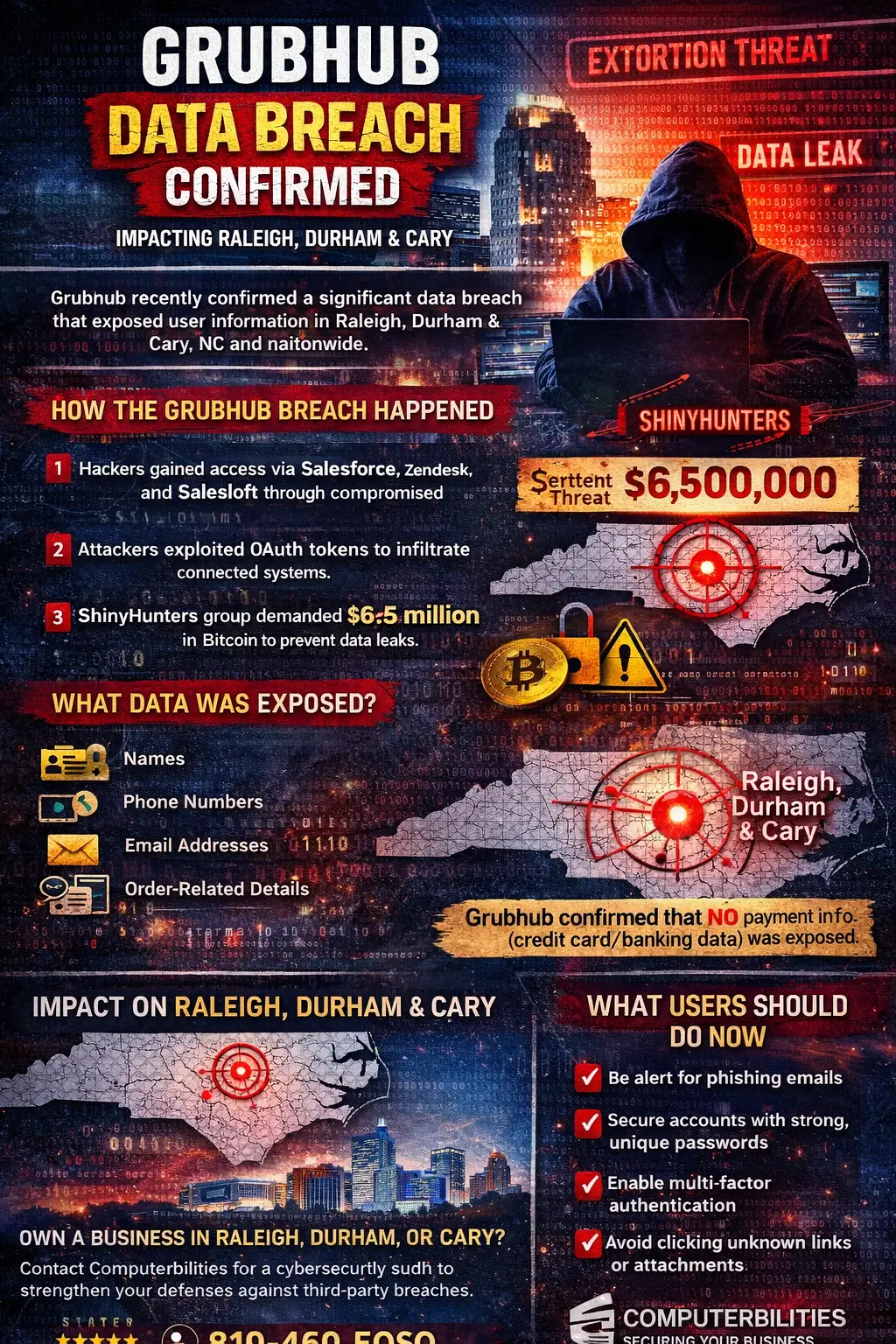
Grubhub uses multiple third-party SaaS platforms to support customer interactions and business operations. These platforms often rely on authentication tokens—such as OAuth tokens—that allow systems to communicate securely without requiring repeated logins.
However, when these credentials are stolen or misused, attackers can gain legitimate-looking access. This type of SaaS credentials breach is especially dangerous because it often bypasses traditional security alarms.
Cybersecurity professionals describe this as a credential theft attack, where attackers exploit trust between systems rather than breaking security controls outright.
ShinyHunters and the Grubhub Hack
Several reports have linked the incident to ShinyHunters, a cybercriminal group known for high-profile breaches and aggressive extortion strategies. The ShinyHunters Grubhub breach allegations follow a pattern seen in previous attacks attributed to the group.
Typically, these attacks involve:
- Accessing data through compromised credentials
- Extracting sensitive information quietly
- Issuing extortion demands
- Threatening public release if payment is not made
In the Grubhub case, reports indicate a Bitcoin ransom demand, reinforcing concerns that cyber extortion has become a preferred tactic among organized threat actors.
What Data Was Stolen in the Grubhub Breach?
One of the most common questions following any breach is: what data was stolen in the Grubhub breach?
Based on available disclosures and reporting, the compromised information may include:
- Customer names
- Email addresses
- Phone numbers
- Limited order-related details
Crucially, Grubhub stated that payment card information and banking details were not accessed. This addresses a key concern many users have asked: did Grubhub financial info get leaked? At present, there is no evidence suggesting that financial data was exposed.
That said, even limited personal data carries value for cybercriminals. Contact details can be leveraged for phishing attempts, impersonation, or account takeover efforts, creating a lingering stolen data leak risk.
Is Grubhub Customer Data Compromised?
So, is Grubhub customer data compromised? The answer is yes—but within defined limits.
While sensitive financial information does not appear to have been accessed, some customer information was exposed through unauthorized data access. For North Carolina residents who regularly use Grubhub, this means heightened awareness is warranted, even if immediate financial harm is unlikely.
Cybersecurity incidents rarely end with the initial breach. Data obtained in one incident is often reused in later attacks, making vigilance essential.
The Role of Salesforce, Zendesk, and Other SaaS Platforms
Another critical aspect of this incident involves Salesforce and Zendesk data, along with other connected platforms used for customer engagement.
This breach highlights a broader CRM system breach risk facing organizations that rely heavily on cloud-based tools. While these platforms are not inherently insecure, improper configuration or credential exposure can create openings for attackers.
This is why cybersecurity experts increasingly warn that third-party vendor breaches are among the most difficult threats to prevent and detect.
Grubhub’s Cybersecurity Response
Grubhub’s response to the incident followed established best practices. According to company statements, the Grubhub cybersecurity response included:
- Revoking compromised credentials
- Launching a formal security breach investigation
- Engaging external cybersecurity specialists
- Notifying affected individuals
- Cooperating with law enforcement agencies
While no response can undo a breach, transparency and swift action help reduce long-term damage and restore trust.
Why Food Delivery Platforms Are Frequent Targets
The food delivery breach category has grown steadily over the past several years. Food delivery platforms sit at a unique intersection of personal, financial, and behavioral data.
From a hacker’s perspective, this data is extremely valuable. Even without credit card numbers, user profiles can reveal:
- Daily routines
- Location patterns
- Purchasing habits
This makes food delivery companies attractive targets in ongoing cybersecurity news cycles.
The Bigger Picture: A Growing Cloud Data Breach Trend
The Grubhub hack is part of a wider cloud data breach trend affecting organizations of all sizes. As businesses rapidly adopt SaaS platforms, security responsibilities become fragmented.
In many cases, companies focus on securing their internal networks while underestimating risks introduced by external integrations. This creates gaps attackers are eager to exploit.
Security professionals increasingly view these incidents as SaaS security incidents, not isolated failures.
Lessons for North Carolina Businesses
North Carolina’s economy includes technology firms, healthcare providers, financial institutions, and universities—all of which rely heavily on cloud platforms.
The Grubhub incident offers clear lessons:
- Audit all third-party integrations regularly
- Limit access permissions to the minimum required
- Rotate credentials and tokens frequently
- Monitor login behavior for anomalies
- Train employees to recognize phishing attempts
Cybersecurity is no longer a purely technical concern; it is a strategic business issue.
What Consumers in North Carolina Should Do
If you use Grubhub or similar platforms:
- Be cautious of unexpected emails or messages
- Avoid clicking suspicious links
- Change passwords if reused elsewhere
- Enable multi-factor authentication when available
While the latest Grubhub breach update does not indicate widespread financial theft, awareness remains your best defense.
Final Thoughts
The Grubhub breach Bitcoin ransom claim may eventually fade from headlines, but its implications remain significant. This incident reinforces a reality many organizations are still adapting to: cybersecurity risks often originate beyond the company’s immediate control.
For consumers, the breach is a reminder to stay informed and alert. For businesses—especially in North Carolina’s growing digital economy—it is a clear signal that third-party security can no longer be an afterthought.
Frequently Asked Questions (FAQs)
What is the Grubhub data breach?
The Grubhub data breach involved unauthorized access to certain customer information through third-party software platforms used by the company.
How did the Grubhub data breach happen?
The breach occurred due to compromised credentials associated with external SaaS tools, allowing attackers to access data without directly hacking Grubhub’s core systems.
Was financial information exposed in the Grubhub breach?
No. Grubhub stated that payment card and banking information were not accessed during the incident.
Is Grubhub customer data compromised?
Some customer data, such as contact information, was accessed without authorization, but sensitive financial data was not compromised.
Who are the hackers behind the Grubhub breach?
Reports have linked the incident to the ShinyHunters group, known for extortion-based cyberattacks.
What should Grubhub users in North Carolina do now?
Users should remain vigilant, watch for phishing attempts, and avoid reusing passwords across platforms.
Is this part of a larger cybersecurity trend?
Yes. The incident reflects a growing trend of cloud-based and third-party SaaS security breaches affecting many industries.
How Computerbilities Helps North Carolina Businesses Stay Secure
At Computerbilities, we work with businesses throughout Raleigh, Durham, Cary, and the greater Triangle area to address exactly the types of risks highlighted by the Grubhub breach.
Our cybersecurity services focus on:
- Third-party and SaaS security assessments
- Credential and access management audits
- Phishing prevention and employee training
- Continuous monitoring and threat detection
- Incident response planning and compliance support
Cybersecurity is no longer just about firewalls—it’s about visibility, preparedness, and proactive defense.
👉 If your business relies on cloud platforms, CRM systems, or third-party integrations, now is the time to review your security posture.
Computerbilities can help you identify hidden risks before they become headlines.
Concerned about third-party data exposure or SaaS security risks?
Schedule a cybersecurity assessment with Computerbilities today.
We help Triangle-area businesses strengthen defenses, reduce risk, and stay compliant—without disrupting operations.