
LA Metro Cyber Incident Disrupts Services: What Happened and What It Means
In March 2026, one of the largest public transportation systems in the United States found itself at the center of a cybersecurity storm. The LA Metro cyber incident quickly escalated from a technical anomaly into a full-scale disruption that affected digital services, raised concerns about data security, and highlighted the growing vulnerability of public infrastructure.
While trains and buses continued to run, the digital backbone that supports millions of daily commuters showed signs of strain. From blank arrival boards to issues with TAP card reloads, the incident revealed a crucial reality: cyberattacks no longer need to stop operations to cause significant disruption.
For businesses in North Carolina—especially in cities like Raleigh, Durham, and Cary—this incident serves as a powerful reminder. Cyber threats are no longer limited to large corporations; they now target essential services and municipal systems, creating ripple effects across entire communities.
Overview of the LA Metro Cyber Incident
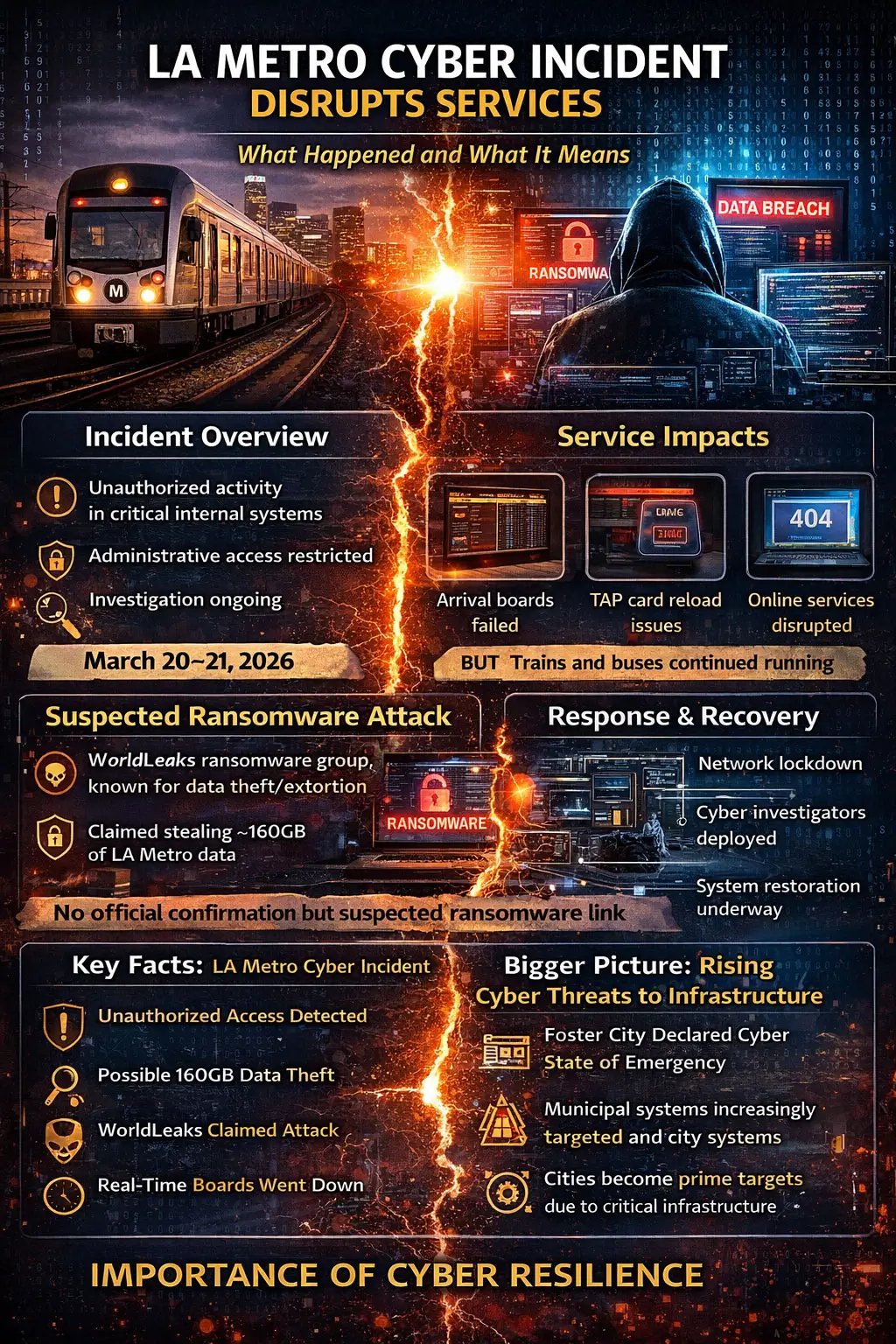
The LA Metro cyberattack 2026 began around March 20–21, when officials detected unauthorized activity within internal systems. What initially appeared to be a suspicious network anomaly quickly triggered a broader investigation.
As a precaution, LA Metro took immediate action by restricting access to internal systems. This move, while disruptive, was critical in preventing further spread of the threat.
From a cybersecurity standpoint, this response reflects a textbook incident response strategy:
- Identify the threat
- Contain the intrusion
- Investigate the scope
- Restore systems gradually
However, the scale of LA Metro’s operations meant that even internal restrictions had visible public consequences.
What Caused the Disruption?
At the heart of the Los Angeles Metro cybersecurity breach was a suspected network intrusion, potentially linked to a ransomware group.
Although LA Metro did not officially confirm a ransomware attack, cybersecurity experts and external reports pointed toward the WorldLeaks ransomware group, which allegedly claimed responsibility for stealing approximately 160GB of data.
This introduces an important shift in cybercrime trends:
👉 Modern ransomware attacks are no longer just about locking systems—they are about stealing data and threatening exposure.
This tactic, known as data exfiltration and extortion, increases pressure on organizations to respond quickly and often quietly.
How the Cyberattack Impacted Metro Services
This is where the story becomes particularly interesting—and alarming.
Unlike traditional disruptions where operations grind to a halt, the LA Metro system disruption primarily affected digital infrastructure, not physical transit.
Key Impacts:
- Real-Time Arrival Boards Went Dark
Passengers across Los Angeles reported that digital display boards stopped showing real-time train and bus information.
For commuters, this created confusion and delays, especially during peak hours.
- TAP Card Reload Issues
Users faced difficulties reloading transit cards via:
- Online platforms
- Customer service systems
This disrupted fare payments and added friction to daily commutes.
- Online Services Became Unavailable
Several digital services were either:
- Temporarily disabled
- Functioning intermittently
- Core Operations Continued
Despite these issues, trains and buses continued running normally.
💡 Key Insight
This incident highlights a critical evolution in cyber threats:
Attackers can disrupt user experience and trust without shutting down core operations.
For businesses, this is a wake-up call. Your systems may appear “operational,” but if your digital services fail, your customers still feel the impact.
Was This a Ransomware Attack?
The question many are asking:
Was this a confirmed LA Metro ransomware attack?
Official Position:
- No formal confirmation from LA Metro
However:
- The WorldLeaks ransomware group claimed responsibility
- Reports suggest possible data exfiltration (~160GB)
- The group is known for extortion-based attacks
🔍 Expert Interpretation
Even without official confirmation, the evidence strongly suggests:
✔ A ransomware-linked intrusion
✔ A data theft component
✔ A potential extortion attempt
This aligns with broader industry trends where attackers prioritize sensitive data over system shutdowns.
LA Metro’s Response and Recovery Efforts
To its credit, LA Metro acted swiftly.
Key Actions Taken:
- Immediate restriction of internal systems
- Deployment of cybersecurity teams
- Collaboration with external experts
- Gradual restoration of services
This approach reflects a mature cybersecurity posture, focusing on containment before full recovery.
🛡️ Why This Matters
Many organizations delay action out of fear of disruption.
LA Metro did the opposite:
👉 They accepted short-term disruption to prevent long-term damage.
This is a critical lesson for businesses.
Data Breach Concerns: What We Know So Far
One of the biggest concerns surrounding the LA Metro hack news is whether sensitive data was compromised.
Current Status:
- No confirmed breach of customer or employee data
- However, claims of data exfiltration remain unverified
⚠️ Why This Still Matters
Even without confirmation, the possibility of data exposure introduces:
- Legal risks
- Compliance issues
- Reputational damage
For public systems, the stakes are even higher because they often handle:
- Personal commuter data
- Payment information
- Operational logistics
Rising Cyber Threats to Public Infrastructure
The LA Metro cyber incident is not an isolated case.
Across the United States, public transport cyberattacks are becoming more frequent.
Why Are Transit Systems Targeted?
- High Visibility
Disruptions affect millions, generating media attention. - Legacy Systems
Many public systems rely on outdated infrastructure. - Complex Networks
Multiple interconnected systems increase vulnerability. - Limited Cybersecurity Budgets
Compared to private enterprises, funding is often constrained.
Recent Trend
Municipal systems across California have experienced:
- Ransomware attacks
- System outages
- Emergency declarations
This points to a larger issue:
👉 Cities are becoming prime targets for cybercriminals.
Key Cybersecurity Lessons for Organizations
For small and medium businesses in North Carolina, the lessons from this incident are invaluable.
- Proactive Monitoring is Non-Negotiable
Early detection of unauthorized activity can prevent full-scale breaches.
- Network Segmentation Limits Damage
By isolating systems, you can prevent attackers from moving laterally.
- Incident Response Planning is Critical
Every organization should have a clear response plan.
Ensure business continuity even during system lockdowns.
- Employee Awareness Matters
Many breaches start with phishing or human error.
For Businesses in Raleigh, Durham & Cary
The takeaway is clear:
If a major public system like LA Metro can be targeted, so can your business.
Investing in managed IT services and cybersecurity solutions is no longer optional—it’s essential.
Expert Commentary: A Shift in Cyberattack Strategy
One of the most important insights from this incident is the evolving nature of cyber threats.
Then:
- Lock systems
- Demand ransom
Now:
- Steal data
- Threaten exposure
- Disrupt services subtly
🧠 Why This Shift Matters
This new model:
- Is harder to detect
- Causes long-term damage
- Increases pressure on victims
Organizations must adapt by focusing on:
- Data protection
- Threat detection
- Cyber resilience
FAQs: LA Metro Cyber Incident Explained
- What happened in the LA Metro cyber incident 2026?
Unauthorized activity was detected in LA Metro’s internal systems, leading to restricted access and service disruptions.
- How did the cyberattack affect LA Metro services?
It disrupted digital services like arrival boards and TAP card reloads but did not stop trains or buses.
- Was customer data compromised?
There is no confirmed data breach, but reports suggest possible data theft claims.
- Who is the WorldLeaks ransomware group?
A cybercriminal group known for stealing data and using extortion tactics rather than just encrypting systems.
- Are public transport systems vulnerable to cyberattacks?
Yes, due to complex networks, legacy systems, and high public visibility.
- What can businesses learn from this incident?
The importance of proactive cybersecurity, incident response planning, and system monitoring.
Conclusion: A Wake-Up Call for Modern Businesses
The LA Metro cyber incident is more than just a news story—it’s a warning.
It shows how digital infrastructure vulnerabilities can disrupt essential services without halting operations. More importantly, it highlights the urgent need for organizations to strengthen their cybersecurity posture.
For businesses in North Carolina, the message is clear:
👉 Cyber threats are evolving
👉 Attackers are getting smarter
👉 Prevention is better than reaction
🔐 Ready to Protect Your Business?
At Computerbilities, we help businesses in Raleigh, Durham, and Cary stay ahead of cyber threats with:
Don’t wait for a cyber incident to take action. Secure your business today.