
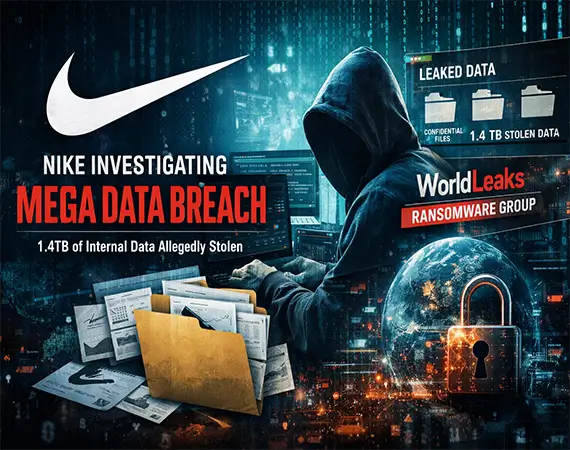
Nike Investigating Mega Data Breach — 1.4TB of Internal Files Allegedly Stolen
Nike, one of the world’s most recognizable brands, is currently investigating what could become one of the most significant corporate cybersecurity incidents of 2026. According to multiple cybersecurity news reports, hackers claiming affiliation with the WorldLeaks ransomware group allege they have stolen approximately 1.4 terabytes of Nike internal data.
This alleged Nike mega breach has captured global attention not because customer payment data was exposed—so far, there is no evidence of that—but because of the type and volume of data reportedly taken. Internal documents, product designs, manufacturing information, and strategic files are said to be part of the leaked cache.
For businesses in North Carolina—from Raleigh’s growing tech startups to Charlotte’s established enterprises—this incident serves as a powerful reminder: cybersecurity threats are no longer limited to financial data theft. Intellectual property and operational intelligence are now prime targets.
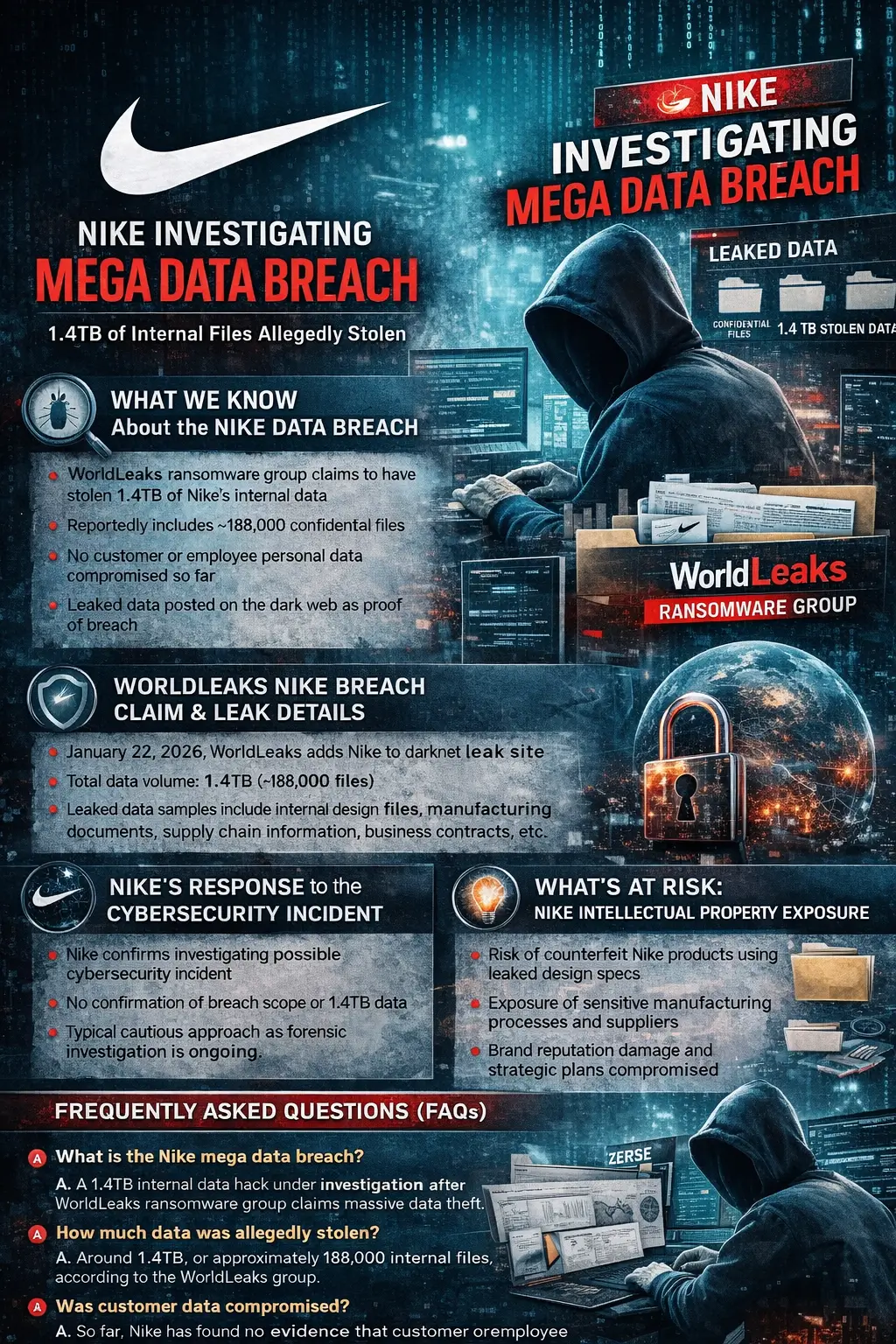
What We Know About the Nike Data Breach So Far
While investigations are ongoing, several facts about the Nike data breach have been consistently reported across trusted sources:
- Hackers claim to have accessed approximately 1.4TB of internal Nike files
- The alleged data includes design files, internal documents, and manufacturing-related information
- The stolen data has reportedly surfaced on dark web forums used by cybercriminal groups
- Nike has confirmed it is investigating a potential cybersecurity incident
- At this time, Nike states there is no evidence of customer or employee personal data exposure
This distinction is critical. Many cyber incidents trigger immediate consumer panic when credit cards or personal information are involved. In this case, the concern is more strategic and long-term—focused on intellectual property and competitive advantage.
From an analogy standpoint, this is less like a stolen wallet and more like stolen blueprints from a secure facility. The financial damage may not be immediate, but the competitive consequences can be far-reaching.
WorldLeaks Nike Breach Claim and Leak Details
The group behind the alleged WorldLeaks Nike data leak is known within cybersecurity circles for targeting large enterprises and threatening public exposure to force negotiations. Unlike traditional ransomware attacks that encrypt systems, groups like WorldLeaks often focus on data exfiltration and extortion.
In the Nike case, WorldLeaks claims to have obtained:
- Product design documents
- Internal communications
- Manufacturing and supply chain data
- Strategic planning files
Reports suggest that sample data was posted online to substantiate the breach claim, a common tactic used to pressure organizations into compliance.
For organizations watching from North Carolina, this tactic should sound familiar. Increasingly, ransomware groups are bypassing encryption altogether. Instead, they focus on stealing data quietly and using public exposure as leverage—a method that can be harder to detect until it’s too late.
Nike’s Response to the Cybersecurity Incident
Nike’s public response has been measured and professional, reflecting best practices in crisis communication. The company has confirmed it is actively investigating the cybersecurity incident and working with external experts.
Key elements of Nike’s response include:
- Acknowledging the investigation without validating unverified claims
- Avoiding speculation about the scope of the breach
- Reassuring stakeholders that customer data does not appear to be affected
- Coordinating with cybersecurity professionals and legal advisors
This approach mirrors what cybersecurity consultants often recommend to businesses in North Carolina: respond quickly, remain factual, and avoid making statements that could later prove inaccurate.
In many ways, how a company responds to a breach can matter just as much as the breach itself. Transparency builds trust; confusion erodes it.
Analysis: Nike 1.4TB Data Leak Implications
The alleged Nike 1.4TB breach raises several important implications that extend far beyond Nike itself.
- Intellectual Property as a Prime Target
Modern cybercriminals understand that intellectual property—designs, formulas, strategies—is often more valuable than credit card numbers. For Nike, leaked design files could influence counterfeit markets, accelerate competitor imitation, or disrupt product launch strategies.
- Supply Chain Vulnerabilities
A Nike manufacturing data leak could expose supplier relationships, production timelines, and logistics strategies. For global companies, this information is highly sensitive and could be exploited to disrupt operations.
North Carolina manufacturers and distributors should take note. If a global giant can be affected, regional businesses with fewer security resources are equally, if not more, vulnerable.
- Reputational Risk
Even without customer data exposure, a Nike cybersecurity incident can still impact brand perception. Investors, partners, and enterprise clients often view cybersecurity maturity as a measure of operational excellence.
- Regulatory and Legal Considerations
Depending on the data involved and jurisdictions affected, breaches like this can trigger regulatory scrutiny, contractual disputes, and long-term compliance costs.
What’s at Risk: Nike Intellectual Property Exposure
Perhaps the most concerning aspect of this incident is the potential Nike intellectual property exposure. Product designs and internal R&D documents represent years of innovation and investment.
If leaked design files circulate widely:
- Counterfeit production could accelerate
- Competitors could gain unfair insights
- Product launch timelines could be compromised
- Market differentiation could erode
For North Carolina’s thriving sectors—technology, manufacturing, healthcare, and professional services—the lesson is clear: intellectual property must be treated as a top cybersecurity priority, not an afterthought.
One cybersecurity consultant once compared IP theft to “losing the recipe, not just the cash register.” You can replace money; rebuilding innovation takes years.
Why This Matters to Businesses in North Carolina
North Carolina has become a hub for innovation, from Research Triangle Park to Charlotte’s financial ecosystem. With growth comes visibility—and with visibility comes risk.
The Nike breach investigation updates highlight several takeaways for local organizations:
- Cyber threats are evolving beyond basic ransomware
- Internal data can be more valuable than customer data
- Dark web exposure is a growing risk
- Incident response planning is no longer optional
Whether you’re a mid-sized manufacturer in Greensboro or a tech startup in Durham, the same principles apply: proactive cybersecurity is far less expensive than reactive damage control.
Frequently Asked Questions (FAQs)
- What is the Nike mega data breach currently under investigation?
The Nike mega data breach refers to a cybersecurity incident in which hackers claim to have stolen approximately 1.4TB of internal Nike data. Nike has confirmed it is investigating the matter, though the full scope and authenticity of the claims are still being assessed.
- How much data was allegedly stolen in the Nike 1.4TB breach?
According to claims made by the WorldLeaks ransomware group, around 1.4 terabytes of internal files were exfiltrated. This reportedly includes internal documents, design files, and manufacturing-related information, rather than customer payment or personal data.
- Is this Nike data breach affecting customer or employee information?
At this stage of the investigation, Nike has stated that there is no evidence suggesting customer or employee personal data was compromised. The incident appears to involve internal corporate data rather than consumer-facing systems.
- Who is behind the WorldLeaks Nike data leak?
The breach claim has been attributed to WorldLeaks, a cybercriminal group known for data theft and extortion tactics. Instead of encrypting systems, such groups often steal data and threaten to release it publicly, including on dark web platforms.
- What type of data was leaked in the Nike internal documents breach?
Reports suggest the Nike internal data leaked may include product design documents, internal communications, manufacturing details, and supply chain-related files. These types of files represent valuable intellectual property rather than financial records.
- Has Nike confirmed the WorldLeaks ransomware claim?
Nike has acknowledged a cybersecurity incident under investigation but has not confirmed the full extent of the WorldLeaks ransomware claim. This cautious approach is standard practice during active breach investigations to avoid misinformation.
- Why is the Nike intellectual property exposure a major concern?
Intellectual property exposure can have long-term consequences. If Nike design files leaked or proprietary manufacturing data is misused, it could lead to counterfeit products, competitive disadvantages, and disruptions across Nike’s global supply chain.
- What does the Nike breach mean for supply chain security?
A Nike supply chain risk breach could reveal sensitive information about suppliers, production schedules, and logistics strategies. This kind of exposure can increase the risk of operational disruption and targeted cyberattacks against partners.
- Where did the Nike stolen data allegedly appear?
Cybersecurity reports indicate that sample data from the breach was posted on dark web forums, a common tactic used to validate breach claims and pressure organizations during extortion attempts.
- Is this considered one of the biggest Nike cybersecurity incidents?
Due to the scale of the alleged 1.4TB data leak, this incident is being viewed as one of the most significant Nike cybersecurity incidents in recent years, even though customer data has not been confirmed as compromised.
- How does this Nike hack compare to other major breaches in 2026?
The Nike hack in 2026 highlights a growing trend where cybercriminals prioritize data theft over system encryption. Compared to traditional ransomware attacks, these breaches focus more on intellectual property and reputational damage.
- What lessons can businesses in North Carolina learn from the Nike breach?
The Nike breach investigation underscores the importance of protecting internal data, not just customer information. Businesses in North Carolina should reassess access controls, data monitoring, incident response plans, and intellectual property protection strategies.
- Is Nike still releasing updates about the breach investigation?
Nike is expected to provide breach investigation updates as more verified information becomes available. Like many large organizations, updates may be limited while forensic and legal reviews are ongoing.
- Can internal data breaches be more damaging than customer data leaks?
Yes. While customer data breaches draw immediate attention, internal data breaches—such as this alleged Nike internal documents leak—can cause long-term competitive and operational damage that is harder to quantify and recover from.
- How can businesses reduce the risk of similar cybersecurity incidents?
Organizations can reduce risk by implementing strong access controls, continuous monitoring, employee security training, regular vulnerability assessments, and a tested incident response plan. Proactive cybersecurity measures are far more effective than reactive recovery.
Final Thoughts: Lessons from the Nike Cyber Attack Investigation
The ongoing Nike cyber attack investigation is not just a headline—it’s a case study in how modern cybercrime operates. While many details are still emerging, the incident underscores a reality that cybersecurity professionals have warned about for years: data is the new currency, and intellectual property is the new gold.
For businesses in North Carolina, this story should prompt reflection rather than fear. Ask the hard questions:
- Where is our most sensitive data stored?
- Who has access to it?
- How quickly would we know if it was taken?
Nike’s experience shows that even global leaders are not immune. The difference between resilience and regret often lies in preparation.
As this story continues to unfold, one thing is already clear—the era of treating cybersecurity as purely an IT issue is over. It is now a core business risk, and the Nike data breach is a powerful reminder of why.