
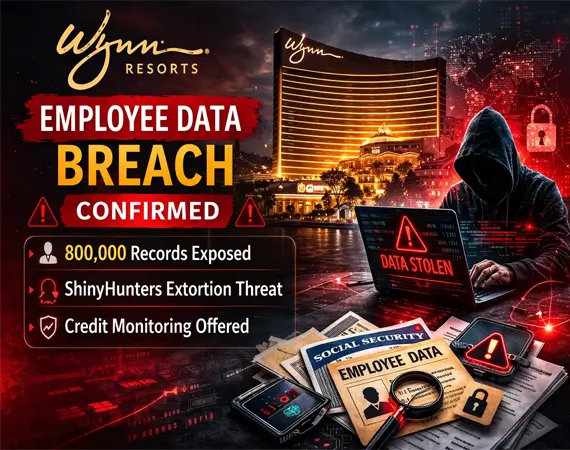
Wynn Resorts Confirms Employee Data Breach: Businesses and Employees Should Know
The Wynn Resorts data breach has quickly become one of the most discussed cybersecurity incidents of 2026. When Wynn Resorts confirmed the employee data breach after its name appeared on a dark web leak site operated by the ShinyHunters extortion gang, it reignited serious concerns about how organizations protect employee information—and how quickly cybercriminals exploit weaknesses.
While the incident occurred in Nevada, the implications extend far beyond Las Vegas. For businesses and employees in North Carolina—from Charlotte’s financial institutions to Raleigh’s tech firms and hospitality groups in Asheville—the Wynn Resorts cybersecurity incident serves as a cautionary case study in modern cyber extortion.
In this detailed analysis, we’ll break down what happened, who was affected, what data was exposed, how Wynn responded, and what lessons organizations in North Carolina can draw from the breach.
What Happened: Timeline of the Wynn Resorts Cyberattack
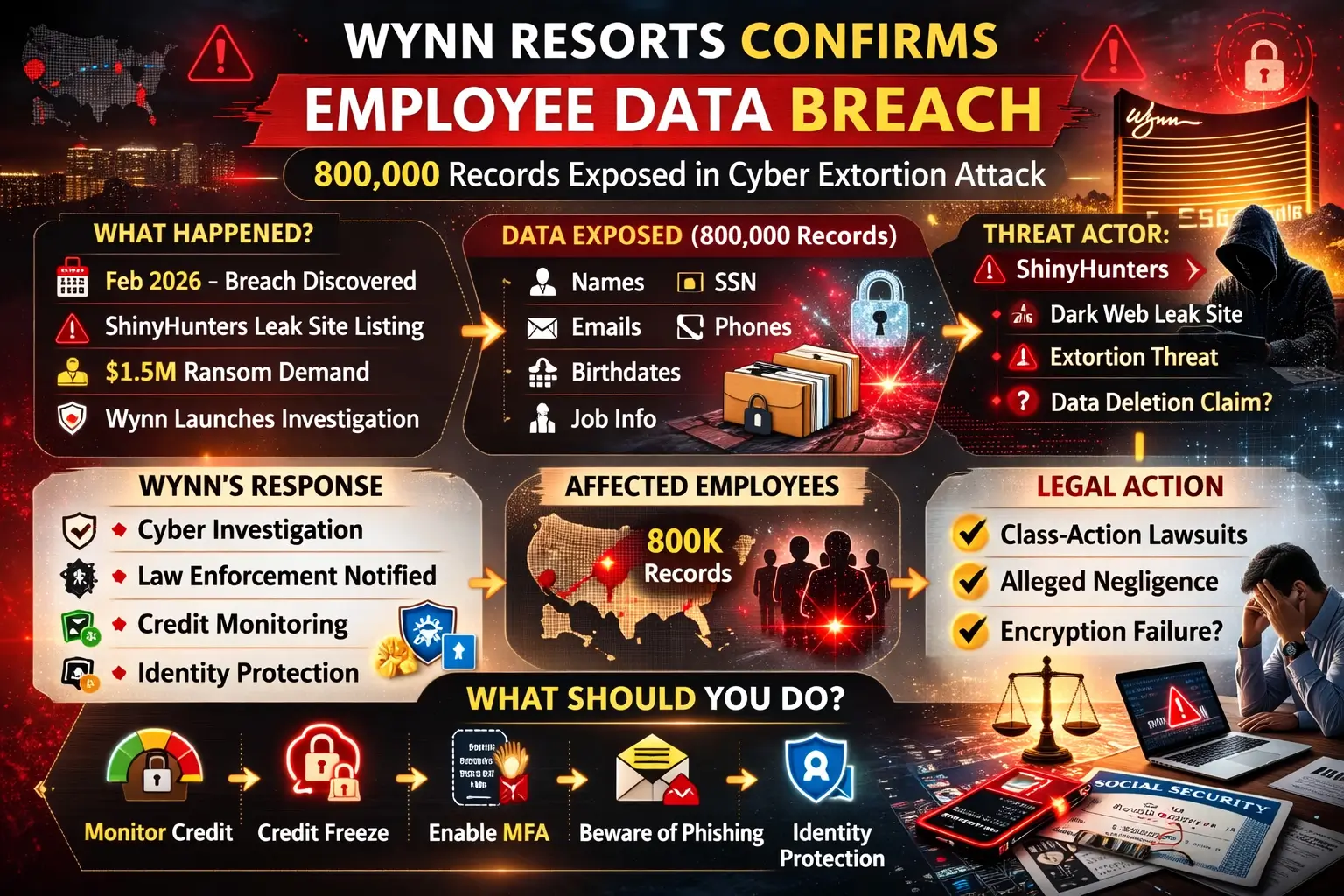
The Wynn Resorts employee data breach came to light in February 2026 after the company was listed on the ShinyHunters extortion group’s leak site. ShinyHunters claimed to have stolen sensitive employee information and issued an ultimatum: pay a ransom—reportedly around 22.34 Bitcoin (approximately $1.5 million at the time)—or risk public exposure of the data.
Shortly after the listing appeared, Wynn Resorts publicly acknowledged the breach. In its disclosure, the company confirmed:
- Unauthorized access to employee data
- Approximately 800,000 records potentially affected
- Immediate activation of internal incident response protocols
- Engagement of third-party cybersecurity specialists
Importantly, Wynn clarified that the breach involved employees—not guests. Casino patrons, hotel visitors, and loyalty program members were reportedly unaffected.
Within days of public reporting, ShinyHunters removed Wynn’s listing from its leak site and claimed the data had been deleted. However, as cybersecurity experts often note, hacker assurances of “deletion” are impossible to independently verify.
The incident is now widely referred to as the Wynn Resorts breach 2026, and it has triggered lawsuits, investigations, and broader industry discussions.
Who Was Affected & What Data Was Exposed
The Wynn employee data leaked in this breach reportedly included highly sensitive employee personally identifiable information (PII), such as:
- Full names
- Social Security numbers
- Dates of birth
- Home addresses
- Phone numbers
- Email addresses
- Employment-related details
This type of information is particularly valuable to cybercriminals because it enables identity theft, tax fraud, and targeted phishing campaigns.
Wynn Resorts stated that its operations were unaffected. The company emphasized that:
- Casino and hotel operations continued uninterrupted
- Guest systems were not compromised
- There was no evidence of misuse of stolen employee data at the time of disclosure
However, some legal complaints filed afterward alleged that broader data exposure may have occurred, and that certain internal systems may not have been sufficiently protected or encrypted.
For employees—especially those whose Social Security numbers were exposed—the breach represents a long-term risk. Unlike passwords, SSNs cannot simply be “changed.”
ShinyHunters: The Hacker Group Behind the Breach
The ShinyHunters data breach Wynn incident fits a familiar pattern. ShinyHunters is a well-known cybercriminal collective that has targeted major corporations across industries.
Who Are ShinyHunters?
ShinyHunters has been linked to high-profile breaches involving retail, technology, and telecommunications firms. Their typical approach involves:
- Gaining unauthorized access through stolen credentials or vulnerabilities
- Exfiltrating sensitive data
- Posting the victim’s name on a dark web leak site
- Issuing a ransom demand
- Publicly releasing data if payment is not made
This “double extortion” model creates both financial and reputational pressure.
In the Wynn Resorts cyber extortion attempt, the group reportedly demanded 22.34 BTC. Wynn has not publicly confirmed whether a ransom was paid. The removal of its name from the leak site sparked speculation, but cybersecurity professionals caution that removal does not prove payment—or deletion.
One expert likened it to a burglar claiming they burned stolen documents after being paid. There’s no audit trail. No receipt. Only trust in a criminal enterprise.
That’s why many companies choose not to confirm ransom payments publicly.
Wynn’s Official Response & Security Investigation
To its credit, Wynn Resorts activated its data breach response procedures quickly.
The company stated it:
- Engaged external cybersecurity forensic experts
- Launched a full internal investigation
- Notified law enforcement
- Began reviewing internal security controls
- Offered affected employees credit monitoring and identity protection services
Wynn Resorts emphasized in public statements that:
“The investigation is ongoing, and there is currently no evidence that guest data was impacted.”
The company also offered Wynn Resorts credit monitoring employee data breach support—typically including:
- 12–24 months of credit monitoring
- Identity theft restoration services
- Fraud consultation assistance
For employees, this provides some short-term reassurance. However, identity theft risks can persist for years.
Legal Ramifications & Lawsuits
The Wynn Resorts data breach lawsuit phase began swiftly.
Multiple class-action lawsuits were filed in Nevada courts, alleging:
- Failure to adequately safeguard employee PII
- Lack of proper encryption measures
- Delayed or insufficient breach notification
- Negligence in cybersecurity oversight
Some complaints specifically referenced alleged vulnerabilities, including potential issues involving enterprise HR platforms such as Oracle PeopleSoft—though investigations are ongoing.
Plaintiffs argue that exposure of Social Security numbers creates permanent identity theft risk and emotional distress.
Potential legal outcomes could include:
- Financial settlements
- Court-mandated security improvements
- Extended monitoring services
- Regulatory fines
For North Carolina businesses, this aspect of the Wynn Resorts cybersecurity incident may be the most instructive. Data breaches no longer end with IT remediation—they evolve into legal and reputational battles.
Broader Cybersecurity Context: A Growing Pattern
The Wynn Resorts cyberattack is not isolated.
The hospitality and entertainment industries have become attractive targets because they manage:
- Large workforces
- High employee turnover
- Centralized HR systems
- Complex vendor networks
Common attack vectors include:
- Phishing attacks targeting HR staff
- Compromised credentials
- Exploitation of unpatched vulnerabilities
- Third-party software weaknesses
Cyber extortion groups operate like businesses. They run leak sites, negotiate payments, and maintain reputations for follow-through to pressure victims.
However, the idea that criminals will reliably “delete” stolen data is widely disputed by security experts. Data may already have been copied, sold, or archived elsewhere.
For North Carolina organizations—particularly in finance, healthcare, manufacturing, and hospitality—this incident underscores the importance of:
- Strong access controls
- Multi-factor authentication (MFA)
- Network segmentation
- Routine vulnerability scanning
- Incident response planning
What Affected Employees Should Do Next
If you were among the 800,000 individuals impacted by the Wynn Resorts breach, immediate action matters.
- Monitor Credit Reports
Request free credit reports from Equifax, Experian, and TransUnion.
- Consider a Credit Freeze
A freeze prevents new accounts from being opened without verification.
- Enable Multi-Factor Authentication
Especially on:
- Banking apps
- Email accounts
- Tax filing platforms
- Watch for Phishing Attempts
Attackers often use breached data to craft convincing scam emails.
- Use Identity Theft Protection Services
Enroll promptly in any offered Wynn Resorts identity protection after breach program. These services usually begin shortly after notification letters are sent and may last 12–24 months.
- File IRS Identity PIN (Optional)
If Social Security numbers were exposed, requesting an IRS Identity Protection PIN can prevent fraudulent tax filings.
Think of identity protection as installing a home alarm after a break-in. It doesn’t undo the burglary—but it reduces future risk.
Lessons for North Carolina Businesses
Even though the breach occurred in Nevada, the warning applies nationally.
North Carolina companies—particularly those in Raleigh’s Research Triangle and Charlotte’s financial sector—should view this as a prompt to:
- Conduct internal security audits
- Review encryption practices
- Test incident response plans
- Assess third-party vendor risks
- Educate employees on phishing awareness
Cybersecurity is no longer optional risk management. It is core operational resilience.
Conclusion: Long-Term Implications of the Wynn Resorts Data Breach
The Wynn Resorts confirms data breach story illustrates the modern cyber threat landscape: organized extortion groups, sensitive employee data exposure, rapid public disclosure, and immediate legal fallout.
While Wynn maintains that operations were unaffected and guest data was secure, the exposure of employee PII carries lasting consequences.
For affected employees, vigilance is essential.
For corporations, prevention is critical.
For policymakers and regulators, the pressure to enforce stronger data protection standards continues to grow.
The Wynn Resorts breach 2026 will likely become a case study in cybersecurity courses and corporate boardrooms alike.
And for organizations across North Carolina, it is a reminder that the next headline could be closer to home.
Cybersecurity is no longer about avoiding inconvenience. It’s about safeguarding identities, livelihoods, and trust.
Frequently Asked Questions (FAQs) About the Wynn Resorts Employee Data Breach
- What happened in the Wynn Resorts data breach?
Wynn Resorts confirmed an employee data breach in February 2026 after the company was listed on the ShinyHunters extortion gang’s dark web leak site. The attackers claimed to have stolen sensitive employee information and demanded approximately 22.34 Bitcoin (around $1.5 million). The breach reportedly involved around 800,000 employee records. Wynn stated that guest systems and casino operations were not affected.
- Who was affected by the Wynn Resorts employee data breach?
The breach impacted Wynn Resorts employees, not hotel guests or casino customers. Current and former employees whose personally identifiable information (PII) was stored in company systems may have been affected. Wynn has indicated that guest data was not compromised.
- What type of information was exposed in the Wynn employee data leak?
According to reports, the stolen data may include:
- Full names
- Social Security numbers
- Dates of birth
- Home addresses
- Phone numbers
- Email addresses
- Employment-related information
This type of data is considered highly sensitive because it can be used for identity theft, tax fraud, and targeted phishing scams.
- Was Wynn Resorts’ guest data compromised?
Wynn Resorts has publicly stated that there is no evidence that guest data or casino operations were impacted. The company emphasized that the incident was limited to employee data and that resort operations remained fully functional.
- Who is ShinyHunters?
ShinyHunters is a cybercriminal group known for conducting data theft and extortion campaigns against large organizations. The group typically gains unauthorized access to company systems, exfiltrates data, and then posts the victim’s name on a dark web leak site while demanding ransom payment. In the Wynn Resorts cybersecurity incident, ShinyHunters claimed responsibility and later removed Wynn’s listing from its leak site.
- Did Wynn Resorts pay the ransom?
Wynn Resorts has not publicly confirmed whether a ransom was paid. Although the company’s name was removed from the leak site, cybersecurity experts caution that removal does not guarantee data deletion. There is currently no independent verification of the attackers’ claim that the stolen data was deleted.
- What steps is Wynn Resorts taking after confirming the data breach?
Wynn Resorts activated its incident response protocols immediately after discovering the breach. The company:
- Engaged external cybersecurity experts
- Launched a forensic investigation
- Notified law enforcement
- Began reviewing security controls
- Offered credit monitoring and identity protection services to affected employees
The investigation remains ongoing.
- Are there lawsuits related to the Wynn Resorts data breach?
Yes. Multiple class-action lawsuits have reportedly been filed, alleging negligence and failure to adequately protect employee data. Some complaints claim that sensitive information was not properly encrypted and that notification procedures may have been insufficient. Legal proceedings are ongoing.
- What should affected employees do now?
Employees potentially impacted by the Wynn Resorts breach should:
- Monitor credit reports regularly
- Consider placing a credit freeze with major credit bureaus
- Enroll in offered credit monitoring services
- Enable multi-factor authentication (MFA) on financial and email accounts
- Watch for suspicious emails or phishing attempts
Taking proactive steps can significantly reduce the risk of identity theft.
- Why is the Wynn Resorts cyberattack important for businesses in North Carolina?
Although the breach occurred in Nevada, it highlights risks that apply to organizations nationwide, including in North Carolina. Businesses in hospitality, healthcare, finance, and technology sectors often store large volumes of employee data. The Wynn Resorts employee data breach demonstrates the importance of strong cybersecurity controls, regular system audits, and incident response planning.
- How can companies prevent similar cybersecurity incidents?
Organizations can reduce risk by:
- Implementing strong access controls
- Enforcing multi-factor authentication
- Conducting regular vulnerability assessments
- Encrypting sensitive employee data
- Training staff on phishing awareness
- Developing and testing incident response plans
Cybersecurity is not a one-time investment but an ongoing operational priority.
- Is the Wynn Resorts breach part of a larger trend?
Yes. The Wynn Resorts breach 2026 reflects a broader rise in extortion-driven cyberattacks targeting large corporations. Cybercriminal groups increasingly focus on employee data because it contains high-value personal identifiers. The hospitality and entertainment industries, in particular, have become frequent targets due to complex IT infrastructures and high workforce volumes.