
Canvas LMS Ransomware Attack: Lessons From the 275 Million User Data Breach
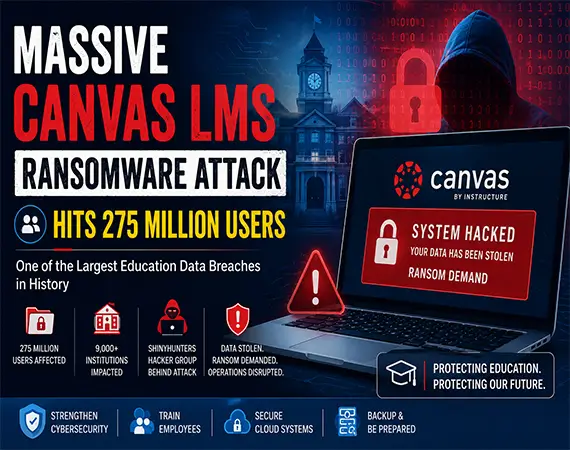
The cybersecurity world was shaken recently by one of the largest education-sector cyberattacks ever reported. The massive Canvas LMS ransomware attack allegedly exposed data belonging to nearly 275 million students, teachers, and educational staff worldwide. What started as service disruptions during finals week quickly escalated into a full-scale cybersecurity crisis affecting approximately 9,000 educational institutions globally.
For many schools and universities, Canvas is more than just a learning platform — it serves as the digital backbone of modern education. Assignments, exams, grades, communication, and institutional operations all rely heavily on the platform. When the attack hit, thousands of students found themselves locked out of coursework and online exams at one of the most critical points in the academic calendar.
The attack has become a defining example of how ransomware attacks are evolving beyond traditional corporate targets. Educational institutions, SaaS providers, and cloud-based platforms are increasingly becoming attractive targets for sophisticated cybercriminal groups seeking high-value data and operational leverage.
For businesses in North Carolina — especially small and medium-sized organizations in Raleigh, Durham, Cary, and surrounding areas — the Canvas cybersecurity incident serves as a stark warning. No organization is too small or too specialized to become a ransomware target.
What Happened in the Canvas Cyberattack?
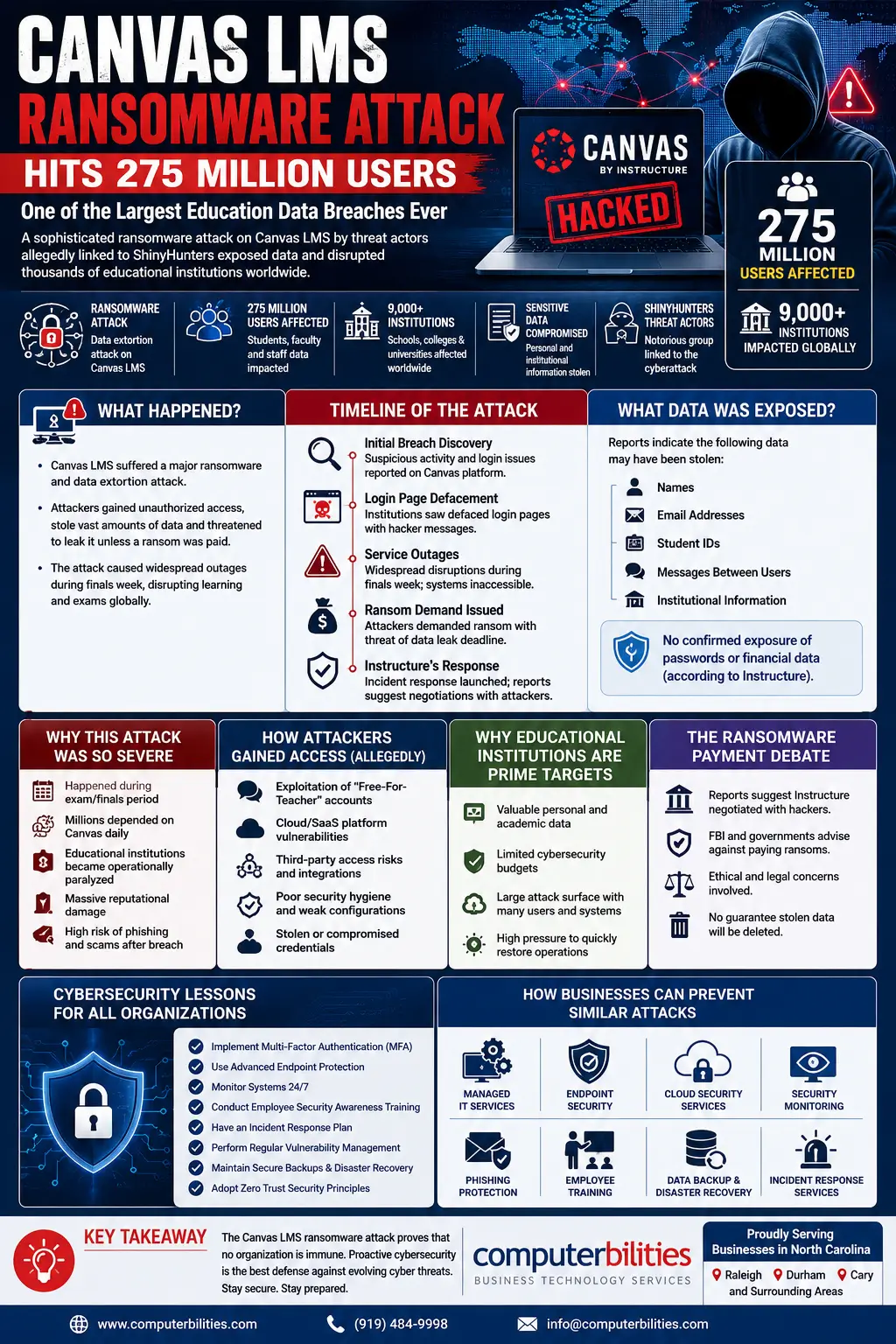
The Canvas LMS ransomware attack reportedly began with suspicious platform disruptions and login issues experienced by users across multiple universities. Shortly afterward, several institutions reported outages, login page defacements, and access failures during active finals and examination periods.
The attack was allegedly linked to the notorious hacking group known as ShinyHunters, a cybercriminal organization previously associated with major data breaches involving corporations, cloud platforms, and online services.
According to multiple reports, attackers claimed to have exfiltrated massive amounts of sensitive data, including:
- Student names
- Email addresses
- Institutional information
- Student IDs
- Communication records
- Educational data
The attackers allegedly threatened to release or sell the stolen information unless ransom demands were met — a classic example of a double extortion ransomware attack.
What made this incident especially alarming was the scale of the disruption. Educational institutions relying on Canvas for daily operations suddenly faced widespread downtime during finals week, creating operational chaos across campuses worldwide.
The Canvas data breach quickly became one of the most discussed cybersecurity incidents of 2026 because of its enormous reach and its impact on millions of students and faculty members.
Who Is Behind the Canvas LMS Hack?
Cybersecurity researchers and multiple news outlets linked the attack to the hacker collective known as ShinyHunters.
ShinyHunters has been associated with numerous high-profile data breaches over recent years and is known for:
- Data extortion attacks
- Selling stolen databases on dark web forums
- Credential theft
- Cloud platform targeting
- SaaS infrastructure attacks
Unlike traditional ransomware groups that only encrypt systems, modern cybercriminal organizations increasingly focus on stealing sensitive data before demanding payment. This strategy creates additional pressure on victims because organizations fear public exposure, reputational damage, and regulatory consequences.
In the Canvas ransomware case, reports suggested the attackers leveraged the threat of public data leaks to intensify ransom negotiations.
This attack reflects a growing cybersecurity trend where hackers are increasingly targeting cloud-based learning management systems and SaaS platforms because they centralize enormous volumes of sensitive user information.
Timeline of the Attack
Understanding how the attack unfolded provides valuable insight into modern ransomware operations.
Initial Signs of Trouble
Users first began reporting login issues and intermittent outages on the Canvas platform during a critical examination period. Many institutions initially believed the disruptions were temporary technical problems.
Login Page Defacement
Shortly afterward, some institutions reportedly observed suspicious modifications to login interfaces and warning messages connected to the cyberattack.
Service Outages Escalate
As the incident evolved, multiple universities and educational organizations experienced:
- System downtime
- Inaccessible assignments
- Communication failures
- Delayed exams
- Student frustration
The timing during finals week amplified the operational and emotional impact significantly.
Ransom Demands
Threat actors allegedly issued ransom demands and threatened to publicly release stolen student and institutional data.
Instructure’s Response
Canvas parent company Instructure initiated incident response procedures, worked with cybersecurity professionals, and communicated with affected institutions. Reports later emerged suggesting negotiations may have occurred between the company and the attackers.
The ransomware payment debate quickly became one of the most controversial aspects of the incident.
What Data Was Exposed?
One of the most concerning aspects of the Canvas security incident was the type and volume of data reportedly compromised.
According to published reports, the following information may have been exposed:
- Full names
- Email addresses
- Student identification numbers
- Institutional records
- Messages between users
- Course-related information
Fortunately, reports indicated there was no confirmed exposure of:
- Financial payment data
- Banking information
- Passwords
However, even without financial records, educational data remains extremely valuable to cybercriminals.
Student data can be exploited for:
- Identity theft
- Phishing attacks
- Social engineering campaigns
- Credential stuffing attacks
- Fraudulent account creation
The long-term risks associated with educational data breaches are often underestimated because victims may not immediately recognize signs of identity misuse.
Why This Attack Was So Severe
Several factors combined to make the Canvas LMS cyberattack uniquely disruptive.
- Timing During Finals Week
The attack occurred during one of the busiest academic periods of the year. Students depended heavily on Canvas for:
- Exams
- Assignments
- Communication
- Grading
- Coursework submissions
The operational disruption created enormous stress for students, faculty, and administrators alike.
- Massive User Dependency
Canvas is deeply integrated into educational operations worldwide. Unlike isolated software tools, the platform acts as a mission-critical infrastructure system for thousands of schools and universities.
When the platform failed, many institutions lacked immediate backup workflows.
- Reputational Damage
Cybersecurity incidents involving educational institutions can rapidly erode trust among:
- Students
- Parents
- Faculty
- Donors
- Regulatory bodies
Educational organizations are expected to safeguard sensitive personal data responsibly.
- Increased Risk of Phishing Attacks
Cybersecurity experts warned that exposed information from the Canvas data breach could fuel future phishing campaigns.
Attackers often use stolen educational information to create convincing scam emails targeting students and faculty members.
How the Attackers Allegedly Gained Access
Although the complete forensic investigation remains ongoing, reports suggest attackers may have exploited weaknesses related to “Free-For-Teacher” accounts and cloud platform access controls.
This incident highlights several common cybersecurity weaknesses affecting SaaS platforms.
Cloud/SaaS Platform Vulnerabilities
Modern organizations rely heavily on cloud-based systems, but poor configuration management and inadequate monitoring can create exploitable gaps.
Third-Party Access Risks
Many institutions integrate multiple vendors and third-party applications into educational platforms. Each integration introduces additional attack surfaces.
Weak Security Hygiene
Cybersecurity researchers frequently identify:
- Weak passwords
- Poor MFA adoption
- Unpatched vulnerabilities
- Excessive user permissions
as contributing factors in major ransomware attacks.
Account Compromise Risks
Stolen credentials remain one of the easiest ways for attackers to gain unauthorized access to cloud systems.
This is why multi-factor authentication (MFA) has become essential for modern cybersecurity protection.
Why Educational Institutions Are Prime Targets
Educational institutions have increasingly become favorite targets for cybercriminal groups.
Valuable Personal Data
Schools store extensive personal information, including:
- Names
- Addresses
- Academic records
- Communication history
- Identification data
This information carries significant black-market value.
Budget Constraints
Many schools and universities struggle with limited cybersecurity budgets, outdated systems, and understaffed IT departments.
Large Attack Surfaces
Educational ecosystems involve:
- Students
- Faculty
- Contractors
- Remote users
- Third-party vendors
The large number of connected users creates expanded attack opportunities.
Operational Pressure
Attackers know educational institutions face enormous pressure to restore systems quickly, especially during exams or enrollment periods.
This urgency can increase the likelihood of ransom negotiations.
The Ransomware Payment Debate
One of the most controversial discussions surrounding the Canvas ransomware attack involves reports suggesting negotiations occurred between Instructure and the attackers.
Why Organizations Consider Paying
Victims sometimes consider paying ransoms because they fear:
- Extended downtime
- Public data exposure
- Legal consequences
- Financial losses
- Reputational damage
Why Governments Discourage Payments
Law enforcement agencies, including the FBI, consistently advise against paying ransomware demands because:
- Payments encourage future attacks
- There is no guarantee stolen data will be deleted
- Attackers may demand additional payments
- Funds may support criminal operations
Ethical Concerns
The ransomware payment debate raises complex ethical questions:
- Should organizations prioritize restoring services quickly?
- Does payment indirectly fuel cybercrime?
- What obligations exist toward affected users?
The Canvas incident has intensified these discussions across the cybersecurity industry.
How Ransomware Attacks Disrupt Operations
The Canvas cyberattack demonstrates that ransomware is no longer just a technical issue — it is a full business continuity crisis.
Operational disruptions can include:
- Platform outages
- Communication failures
- Productivity losses
- Customer frustration
- Financial losses
- Regulatory scrutiny
For businesses in North Carolina, ransomware incidents can quickly interrupt:
- Client operations
- Revenue streams
- Employee workflows
- Customer trust
Small and medium-sized businesses are especially vulnerable because they often lack dedicated cybersecurity resources.
Key Cybersecurity Lessons for Organizations
The Canvas LMS ransomware attack offers valuable lessons for businesses, schools, and organizations of all sizes.
Implement Multi-Factor Authentication (MFA)
MFA significantly reduces the risk of account compromise and credential theft.
Invest in Endpoint Protection
Modern endpoint security tools help detect ransomware activity before it spreads across systems.
Conduct Employee Security Training
Employees remain one of the biggest cybersecurity risk factors. Regular awareness training can reduce phishing success rates dramatically.
Strengthen Vulnerability Management
Organizations must:
- Patch systems promptly
- Monitor cloud configurations
- Eliminate outdated software
Develop an Incident Response Plan
Every organization should have a documented cybersecurity incident response strategy that includes:
- Isolation procedures
- Communication workflows
- Recovery processes
- Backup validation
Use Zero Trust Security
Zero Trust frameworks minimize unauthorized access by continuously verifying users and devices.
Maintain Secure Backups
Reliable backup and disaster recovery solutions remain essential for ransomware resilience.
How Businesses Can Prevent Similar Attacks
Businesses across Raleigh, Durham, Cary, and throughout North Carolina should view the Canvas data breach as a warning sign.
Cybercriminals increasingly target:
- Cloud platforms
- Small businesses
- Managed service providers
- Educational institutions
- Healthcare organizations
To reduce cybersecurity risks, organizations should prioritize:
- Managed IT services
- Security monitoring
- Endpoint detection and response
- Cloud security services
- Phishing protection
- Cybersecurity risk assessments
Partnering with experienced cybersecurity professionals can help organizations proactively identify vulnerabilities before attackers exploit them.
The Growing Importance of Managed Cybersecurity Services
As cyber threats continue evolving, many organizations lack the internal expertise needed to defend against sophisticated attacks.
Managed cybersecurity services can provide:
- 24/7 threat monitoring
- Vulnerability assessments
- Endpoint security management
- Security awareness training
- Incident response support
- Backup and disaster recovery
For small and medium-sized businesses, outsourcing cybersecurity operations often provides stronger protection at a lower cost than maintaining large in-house security teams.
Final Thoughts
The Canvas LMS ransomware attack proves that no organization — including schools, universities, and cloud-based platforms — is immune to modern cyber threats.
The incident exposed how deeply organizations depend on cloud infrastructure and how devastating operational disruptions can become when cybersecurity defenses fail.
For businesses throughout North Carolina, the lesson is clear: proactive cybersecurity is no longer optional.
Organizations that invest in:
- Managed IT services
- Endpoint protection
- Employee cybersecurity training
- Incident response planning
- Cloud security
- Data backup and recovery
will be far better positioned to defend against future ransomware attacks.
Cybercriminals continue evolving rapidly. Businesses must evolve faster.
FAQs
What is the Canvas LMS ransomware attack?
The Canvas LMS ransomware attack was a major cybersecurity incident involving alleged data theft and service disruptions affecting approximately 275 million users across thousands of educational institutions globally.
Who was behind the Canvas cyberattack?
Reports linked the attack to the cybercriminal group ShinyHunters, known for data extortion attacks and large-scale data breaches.
What data was exposed in the Canvas data breach?
Reportedly exposed information included names, email addresses, student IDs, institutional data, and communication records. No confirmed exposure of financial data or passwords was reported.
Why are educational institutions targeted by ransomware attacks?
Educational institutions store large volumes of personal data, often operate with limited cybersecurity budgets, and face operational pressure to restore services quickly.
How can businesses protect themselves from ransomware?
Businesses can improve protection through:
- Multi-factor authentication
- Endpoint security
- Employee training
- Security monitoring
- Regular backups
- Vulnerability management
- Incident response planning
What is a double extortion ransomware attack?
A double extortion attack involves both encrypting systems and stealing sensitive data. Attackers threaten to publish stolen information unless ransom demands are paid.